Markers are shown only for places with reference coordinates. Numbers link markers to the list; nearby points are grouped. Confirm the exact visiting address.
Choose up to 12 places from this page and arrange them. Your selection is temporary and clears when the page, language or filters change. In the planner you will confirm how to add them to your trip.
Choose places for your route · 24
Selected places: 0 / 12
No places selected.
The planner will check that every place is still published. This order is a proposal, not an automatically calculated road route.
The reserve in Slavyanka protects black pine and Bosnian pine forests alongside rare limestone plant communities. Mediterranean influence and local endemic species explain the exceptional botanical diversity of this mountain landscape.
The museum stands above the foundations of Bishop John's early Christian basilica. Roman funerary reliefs, votive tablets and mosaics reveal the religious and artistic life of the ancient town.
The reserve protects valuable Macedonian and Bosnian pine forests and numerous endemic plants. The Balkan chamois is its emblem, while eagles nest among old woodland and the rugged mountain landscape.
Established in 2007, the park protects endemic species and mountain ecosystems. Mediterranean warblers are among its characteristic birds, while thematic routes explain the chestnut’s life and Belasitsa’s butterflies, flowers and ecological relationships.
Rescue excavations uncovered the basilica in 1989. Its three-aisled church dates from the fifth–sixth centuries and retains floor mosaics; an adjoining baptistery and atrium reveal the early Christian episcopal complex.
The city occupies the southern slope of Kozhuh near Rupite. Its history connects the Sintian people with the Macedonian kingdom and subsequently with Roman rule in the middle Struma valley.
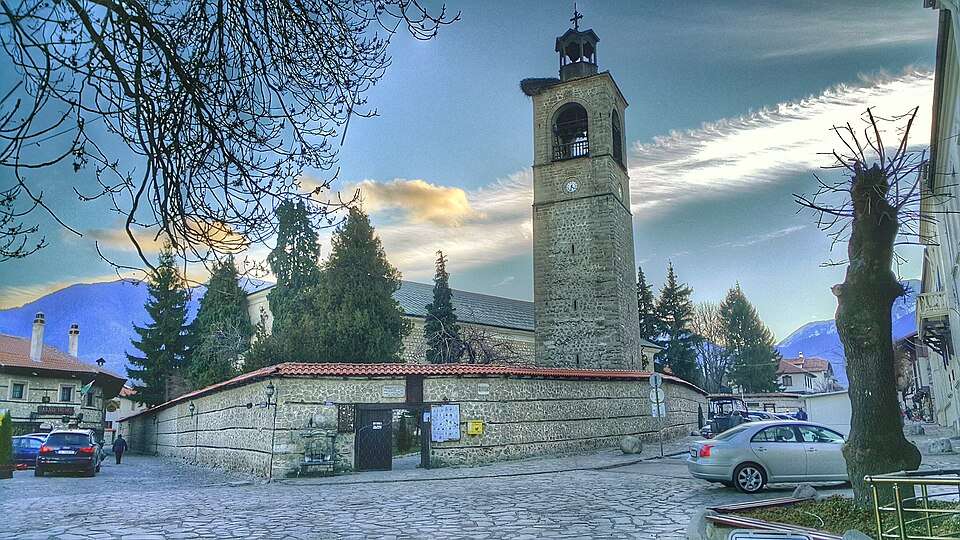
Built in 1835, the church combines three-nave architecture with several Bulgarian Revival artistic traditions. Velyan Ognev created its iconostasis and decorative painting, while Dimitar and Simeon Molerov painted the icons.
The building formerly served as a women's monastic dependency of Hilandar and Rila monasteries. Six galleries trace Bansko's painting school, founded by Toma Vishanov and continued by the Molerov family.
A tunnel carved into the rock forms the wine cellar, with immense barrels for Melnik wine. Upstairs, murals, woodcarving and coloured glass reveal the wealth of a Revival merchant's household.
Housed in the Pashov House, the museum combines a stone ground floor with a timber residential storey. Cellar photographs and winemaking equipment illustrate livelihoods associated with Melnik’s local grape variety.
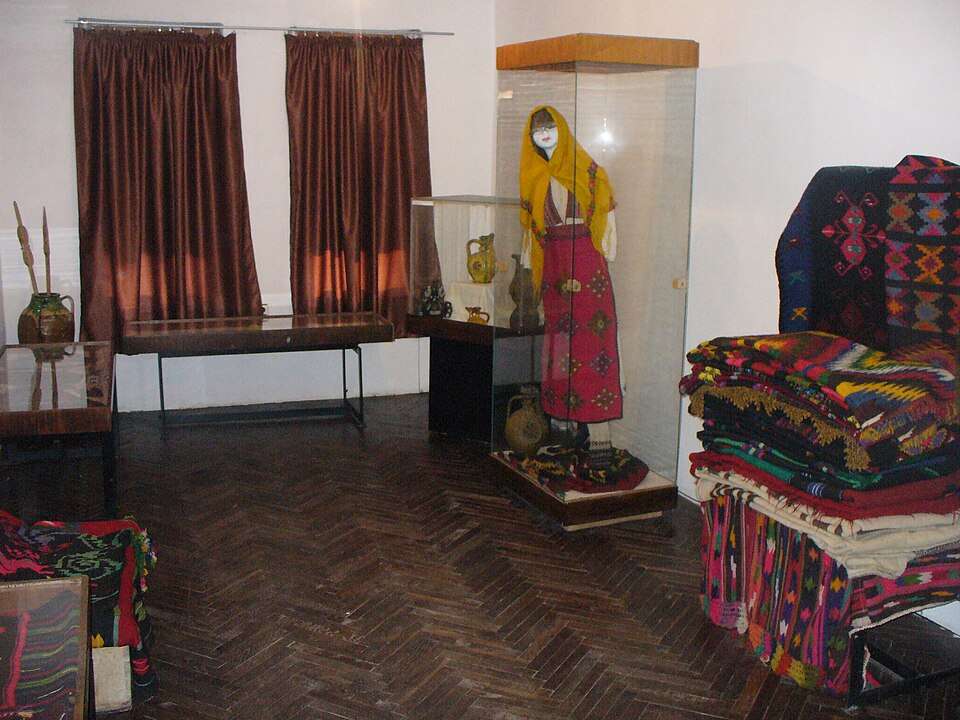
The museum occupies a former tobacco merchant’s house, featuring carved ceilings and doors by local followers of the Debar school. Ethnographic collections present costumes, textiles and traditional crafts from Nevrokop.
The authentic Benina house combines an ethnographic display with letters, photographs and publications. These trace the work of Bulgaria's first grammar author and his contribution to National Revival education.
The exhibition recreates the poet’s childhood home using his family’s recollections. Manuscripts, early publications and personal belongings connect this domestic setting with the development of his poetry and his fate.
The forests include spruce, Scots pine, fir and beech, with capercaillie and black woodpeckers among protected inhabitants. The reserve also conserves rare plants such as golden columbine and yellow gentian.
Silicate and limestone terrains create different plant habitats, while lakes add moist ecological niches. Local endemics include the Pirin poppy and Pirin thyme, which grow nowhere else beyond this mountain.
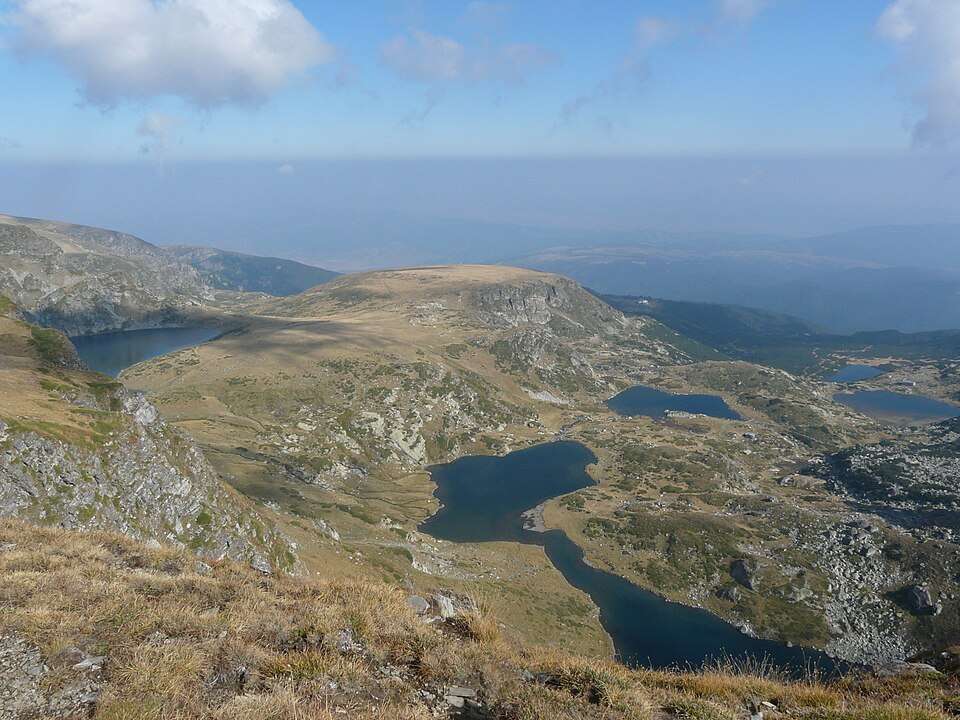
Pirin’s landscape was shaped by glaciers and contains more than 70 glacial lakes. Conifer forests give way to alpine meadows, while screes, caves and waterfalls enrich this World Heritage landscape.
The waterfall forms on the Bashliytsa shortly before its meeting with the Sarchaliytsa. Together these rivers begin the Sandanska Bistritsa, linking the mountain waterscape with the river flowing through Sandanski.
Roman masks depicting satyrs and bacchantes are among the archaeological highlights, alongside medical instruments recovered from a grave near Bansko. Together they illuminate life in the ancient Struma valley.
Glacial lakes are scattered across Rila’s high mountain terrain, predominantly on northern exposures. Groups such as the Musala and Maritsa lakes connect former glaciation, mountain relief and today’s water basins.
Glaciation left groups of high mountain lakes, with coniferous forests below the treeless ridges. The Iskar, Maritsa and Mesta originate within the park, linking mountain ecosystems with distant river basins.
The monastery church preserves a dated inscription from 1597 among its murals. Its carved wooden iconostasis and stained glass in the eastern section add further layers to the monastery’s artistic heritage.
The iconostasis of Saint Petka Bulgarska contains icons painted by artist Svetlin Rusev. Vanga’s small house stands nearby, connecting the religious complex with the personal history of its founder.
Behind the modest façade lies a three-aisled interior covered with well-preserved frescoes. Portraits of the church's donors and Bulgarian inscriptions offer particularly revealing evidence of the local religious tradition.
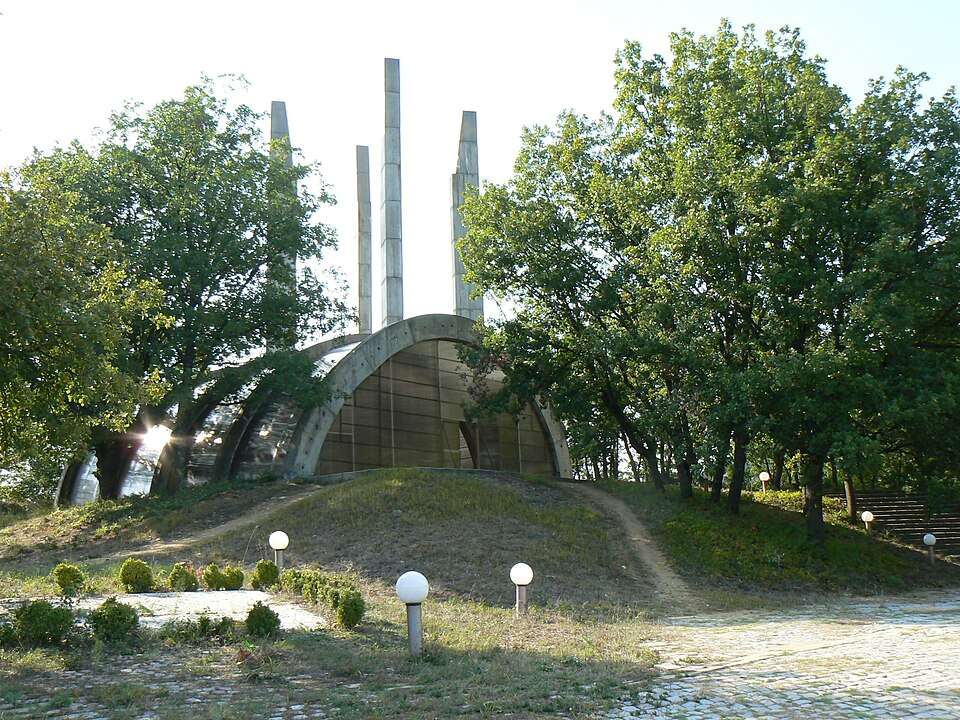
Archaeological finds include inscribed marble slabs, jewellery, arrows and pottery. They complement the memorial dedicated to Tsar Samuil and the Battle of Klyuch, connecting historical remembrance with material evidence.