All provincesBulgaria by province
Sofia Province
Choose a province and discover places for your next trip — landmarks, cities and villages.
- Landmarks
- 23
- Cities
- 18
- Villages
- 266
- Settlements
- 284
- Municipalities in catalogue
- 22
- Places with a photo
- 210
Counts show current published records with an assigned province in our catalogue.
Provincial centre: Sofia
Places found: 23 · Displayed positions 1–23 · Page 1 / 1
Map of displayed places
Markers are shown only for places with reference coordinates. Numbers link markers to the list; nearby points are grouped. Confirm the exact visiting address.
Map: Global Tour · Outline: Natural Earth

Nature and mountains
Zasele
The Skaklya River descends through the eastern Ponor Mountains in three cascading drops. The highest reaches 85 metres; in winter, frozen water creates striking ice formations along the cliffs.
Photo: Raina Kamenova-Rorie · CC BY-SA 4.0 · License

Nature and mountains
Stara planina
The park includes the highest parts of the central Balkan Mountains and nine strict reserves. Their representative old beech forests belong to UNESCO’s international heritage property protecting Europe’s ancient beech forests.
Photo: Gencho Iliev, Director of National Park Central Balkan · CC BY-SA 4.0 · License

Architecture and settlements
Botevgrad
Blue decoration and a three-part silhouette combine National Revival architectural motifs with a domed top. The original clock mechanism, made by local metalworker Gencho Nakov, survives in the museum; the tower uses a replica.
Photo: Niqshoa17 · CC BY-SA 4.0 · License

Architecture and settlements
Etropole
Built in 1710 as a watchtower and defensive structure, the tower retains loopholes in its walls. In 1821, it became a clock tower with Dido’s mechanism and a bell from a monastery church.
Photo: MrPanyGoff · CC BY-SA 3.0 · License

Monasteries and places of worship
Samokov
The church built in 1837–1839 preserves icons by Dimitar Zograf and a narthex mural by Zahari Zograf. The Virgin shelters donors and clergy beneath her veil, with the artist including his own portrait.
Photo: Vassia Atanassova - Spiritia · CC BY-SA 3.0 · License

Nature and mountains
Dragoman
After drainage ceased, the marsh regained its importance for waterbirds. Bulrushes, cattails, sedges and open water form a habitat mosaic supported by the conservation work of the Balkani Wildlife Society.
Photo: IvanaMadzarevic · CC BY-SA 4.0 · License
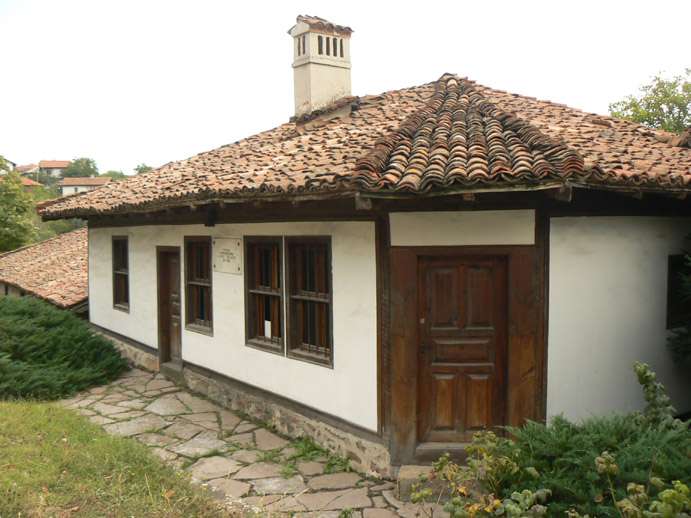
Museums and galleries
Baylovo
The writer's father maintained the village's first school on the ground floor. Personal belongings, the family library and writing table evoke the setting where Elin Pelin grew up and composed early stories.
Photo: Vassia Atanassova - Spiritia · Public domain · License
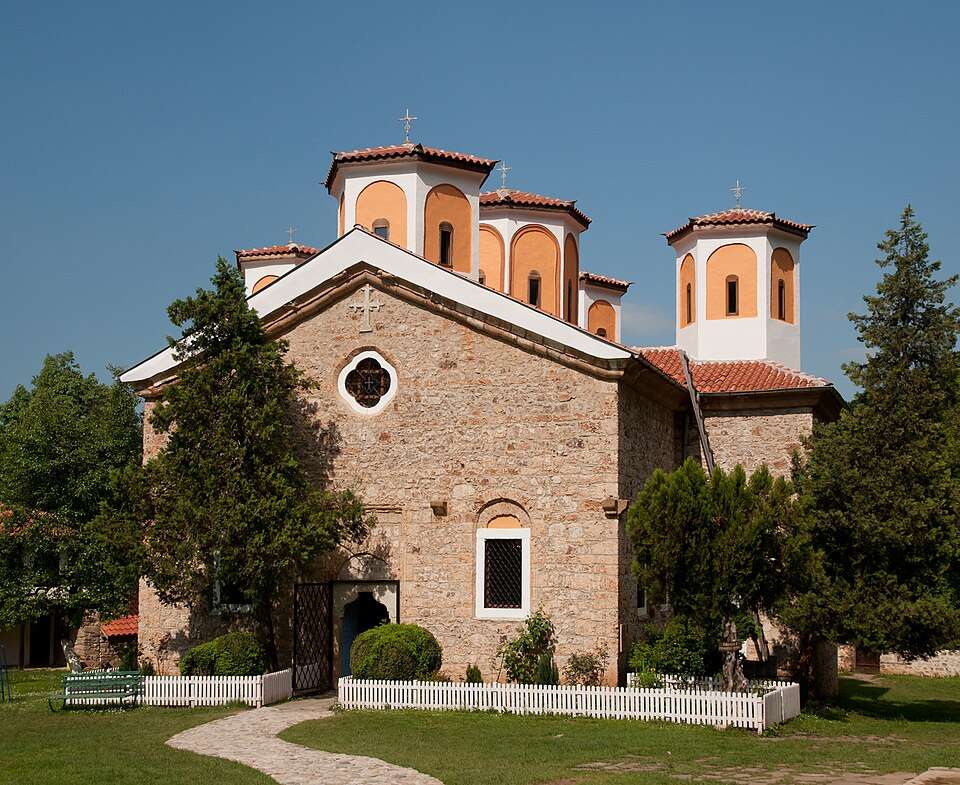
Monasteries and places of worship
Etropole
A literary and icon-painting school flourished here in the sixteenth–seventeenth centuries. Scribes developed a distinctive Etropole calligraphic style; the Holy Trinity patronal icon was signed by Nedyalko of Lovech in 1598.
Photo: MrPanyGoff · CC BY-SA 3.0 · License
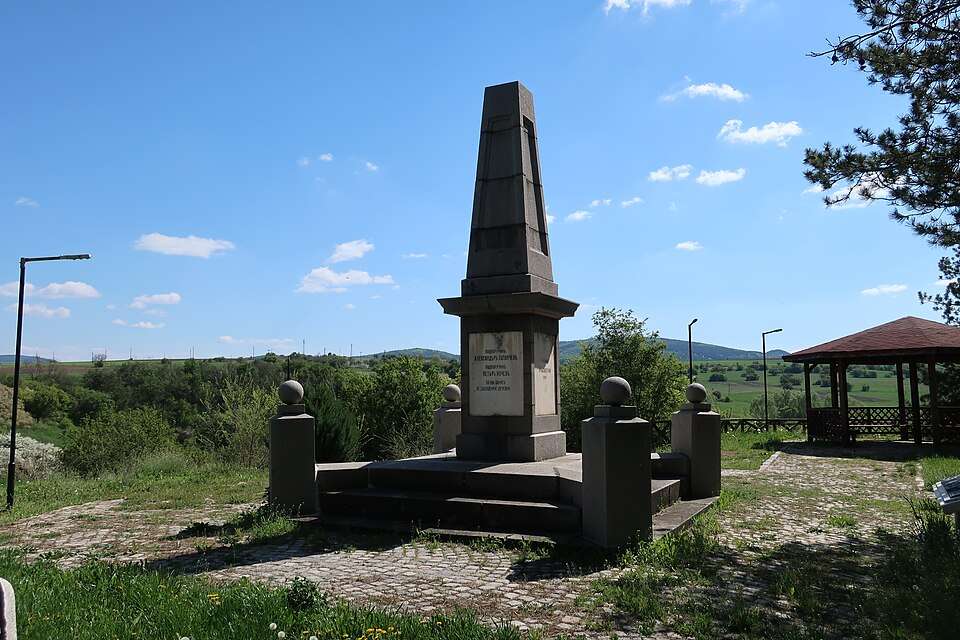
History and archaeology
Slivnitsa
The granite memorial in Aldomirovtsi stands above a collective grave of soldiers from the Seventh Preslav Regiment. Officers' personal donations funded this commemoration of the Serbo-Bulgarian War of 1885.
Photo: Алдомир · CC BY-SA 4.0 · License
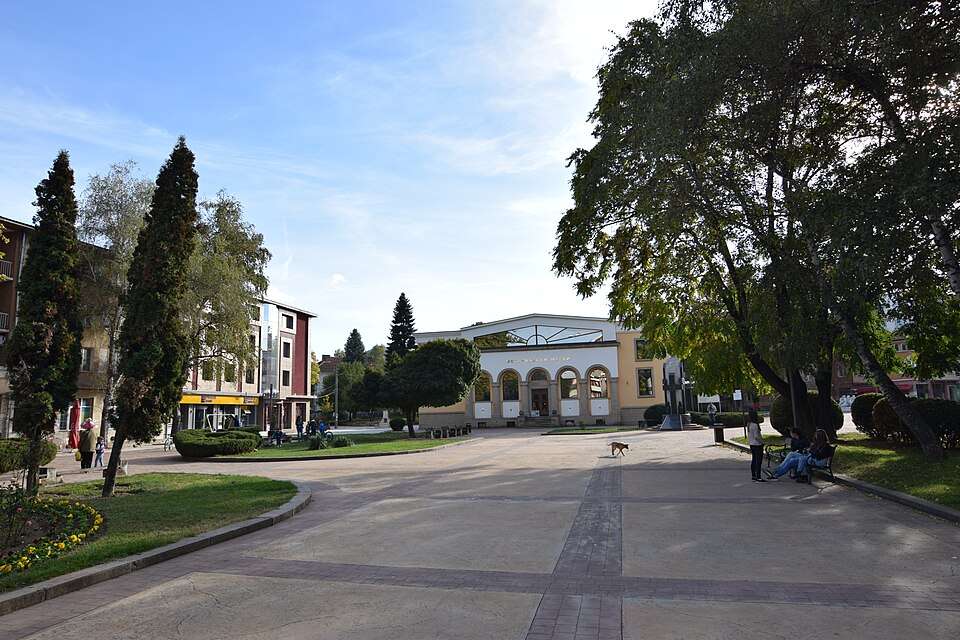
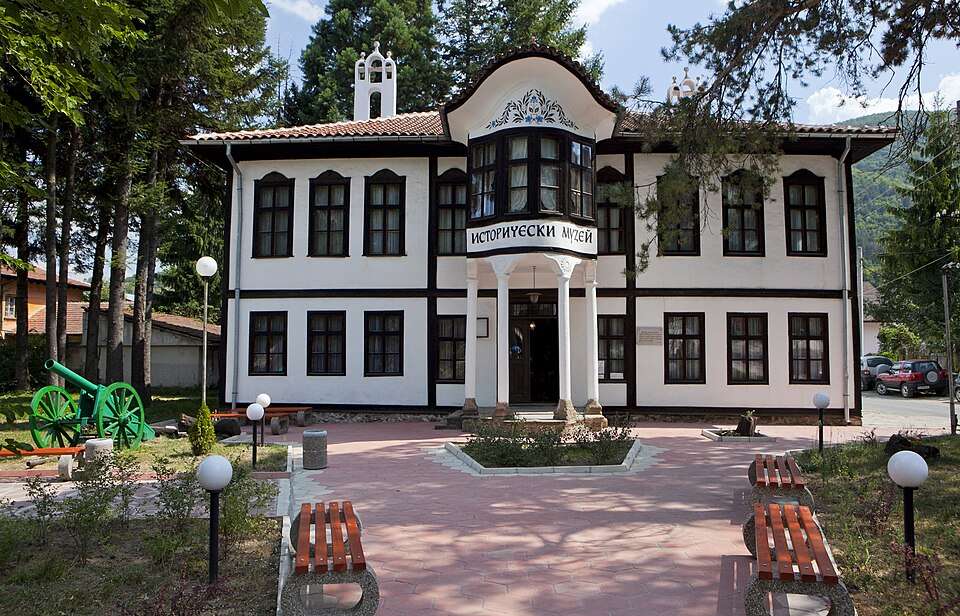
Museums and galleries
Botevgrad
The museum tradition began with a collection at the local secondary school. Original documents, photographs and objects form its historical holdings, now presented in the restored former courthouse building.
Photo: Vladimir Angelkov · CC BY-SA 4.0 · License
Museums and galleries
Etropole
The former government house brings crafts, mining and the Etropole literary school into one historical narrative. Documents, photographs and original objects show how economic life connected with education and local philanthropy.
Photo: JoanaMateeva · CC BY-SA 4.0 · License

Museums and galleries
Samokov
Ironworking and water-powered samokov hammers explain the origin of the town's name. Icons, paintings and Zahari Zograf's personal belongings complement this economic history with the heritage of Samokov's celebrated painting school.
Photo: Vassia Atanassova - Spiritia · CC BY-SA 3.0 · License

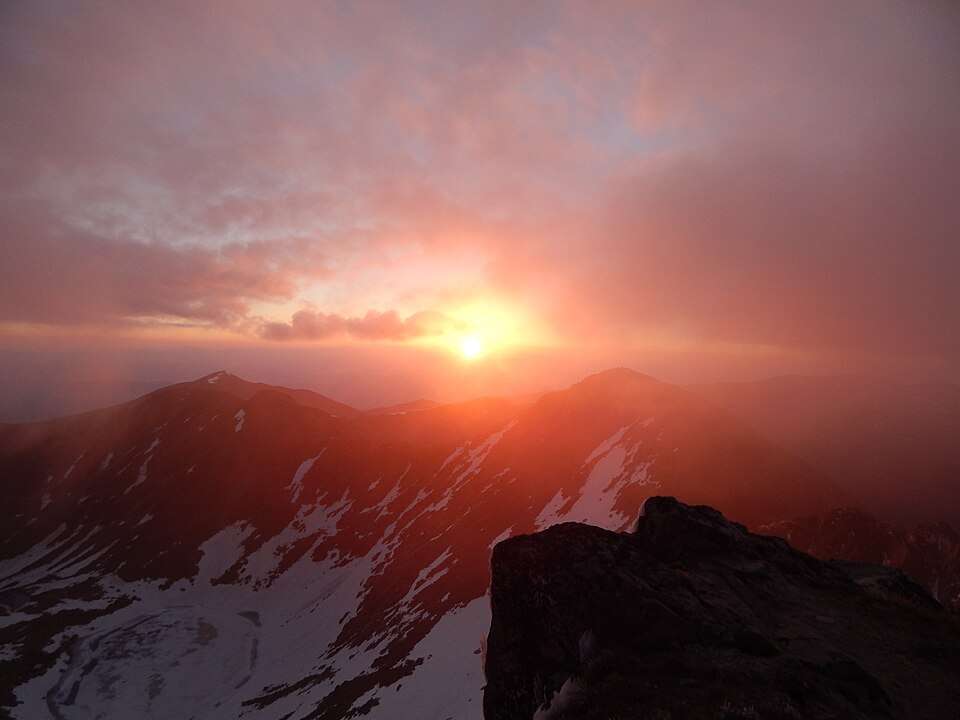
Nature and mountains
Rila
Four glacial lakes occupy a cirque between Bliznatsite, Marishki Chal and Mancho. Two are permanent and two dry up in summer; their waters feed Tiha Maritsa, an important headstream of the Maritsa.
Photo: No machine-readable author provided. Preslav~commonswiki assumed (based on copyright claims). · Public domain · License
Nature and mountains
Rila
Seven Musala lakes lie beneath the summit, whose ridges connect with Mala Musala, Irechek and Deno. Bulgaria’s first high-altitude meteorological observatory was established on the peak in 1932.
Photo: Iliana Teneva · CC BY-SA 4.0 · License

History and archaeology
Skravena
The ossuary commemorates companions killed after the defeat of Botev's detachment. Skravena residents buried their remains beside the village church before they were later transferred to a dedicated memorial.
Photo: Vassia Atanassova - Spiritia · CC BY-SA 3.0 · License

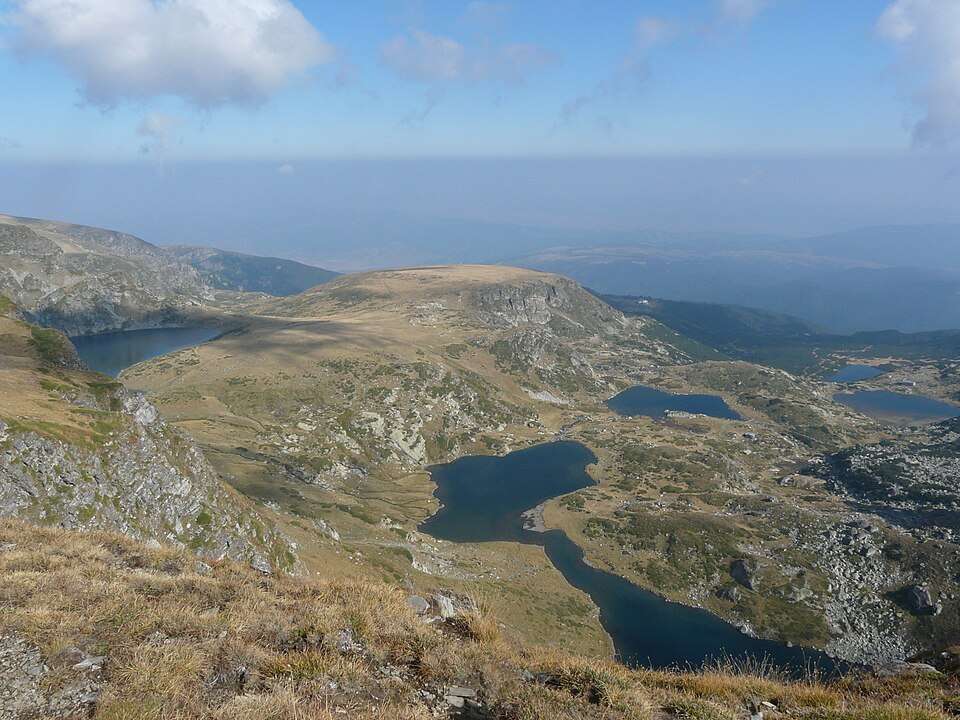
Nature and mountains
Rila
Glacial lakes are scattered across Rila’s high mountain terrain, predominantly on northern exposures. Groups such as the Musala and Maritsa lakes connect former glaciation, mountain relief and today’s water basins.
Explore nearby placesPhoto: Leondeleeuw · CC BY-SA 4.0 · License
Nature and mountains
Rila
Glaciation left groups of high mountain lakes, with coniferous forests below the treeless ridges. The Iskar, Maritsa and Mesta originate within the park, linking mountain ecosystems with distant river basins.
Photo: Ivan Samardzhiev · CC BY-SA 3.0 · License

Monasteries and places of worship
Skravena
The present church stands on uncovered earlier foundations following rebuilding initiated by nun Lyudmila. Its single nave, bell tower and residential building form a small complex beside an ancient tree near Skravena.
Photo: Мико · CC BY-SA 3.0 · License

Monasteries and places of worship
Osenovlag
The monastery beside the Gabrovnitsa River is also called Osenovlag’s Holy Virgin Monastery. Its history includes repeated rebuilding, sheltering Sofroniy of Vratsa and a monastic school associated with National Revival education.
Photo: Спасимир · CC BY-SA 3.0 · License

Monasteries and places of worship
Chavdar
The chapel's surroundings are associated with the municipality's celebration after Easter. Gatherings and musical events add a community dimension to the hill's religious character, preserving links between local faith and festive tradition.
Explore nearby placesPhoto: Спасимир · CC BY-SA 3.0 · License

History and archaeology
Chavdar
In 2019, the park joined EXARC, the international network for archaeological open-air museums and experimental archaeology. Membership connects Chavdar’s reconstruction project with international exchanges of knowledge and museum practice.
Explore nearby placesPhoto: Anton Lefterov · CC BY-SA 4.0 · License
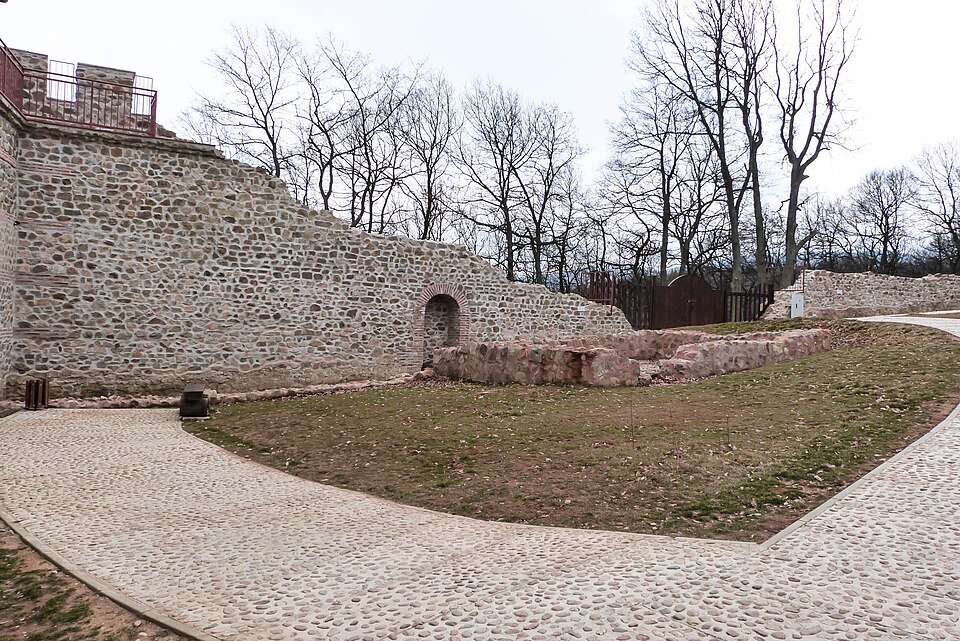
Architecture and settlements
Belchin
Excavations of the fortress began in 2007. Outside its walls, church remains overlie a pagan sanctuary, while the museum building presents archaeological finds, early printed books and regional traditional costumes.
Photo: CHILIEV · CC BY-SA 4.0 · License
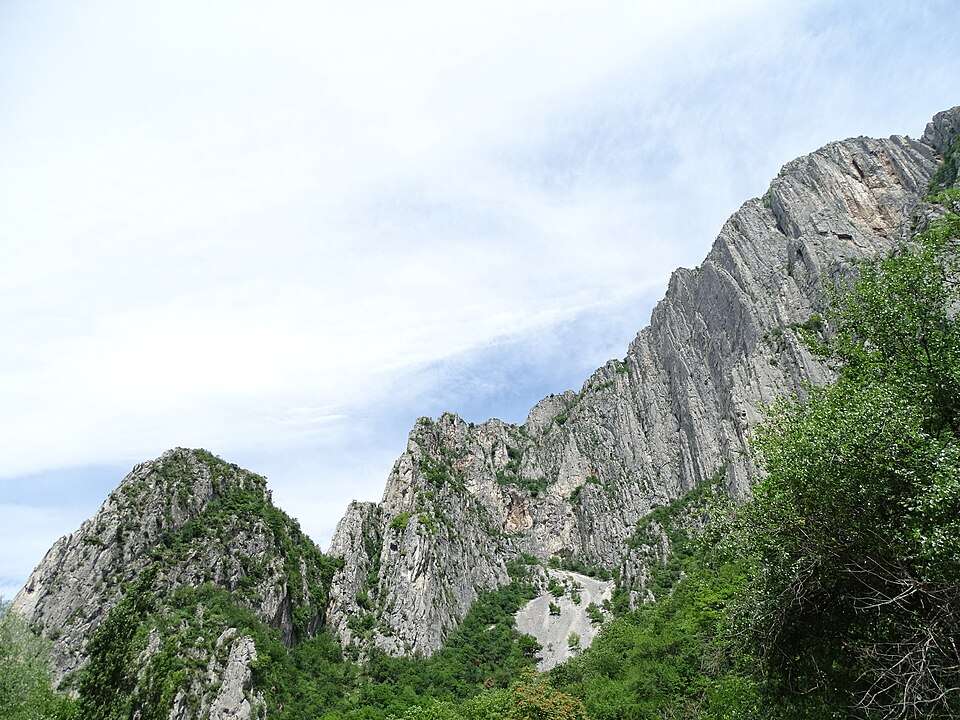
Nature and mountains
Vratsa
Oak and beech forests accompany Vratsata’s limestone cliffs and varied birdlife. Nesting species include black storks and golden eagles, while remains of Vratitsa fortress connect the natural landscape with the region’s medieval history.
Photo: Adam Jones from Kelowna, BC, Canada · CC BY-SA 2.0 · License
Provinces and administrative relationships use the NSI EKATTE reference catalogue. НСИ · NSI
